
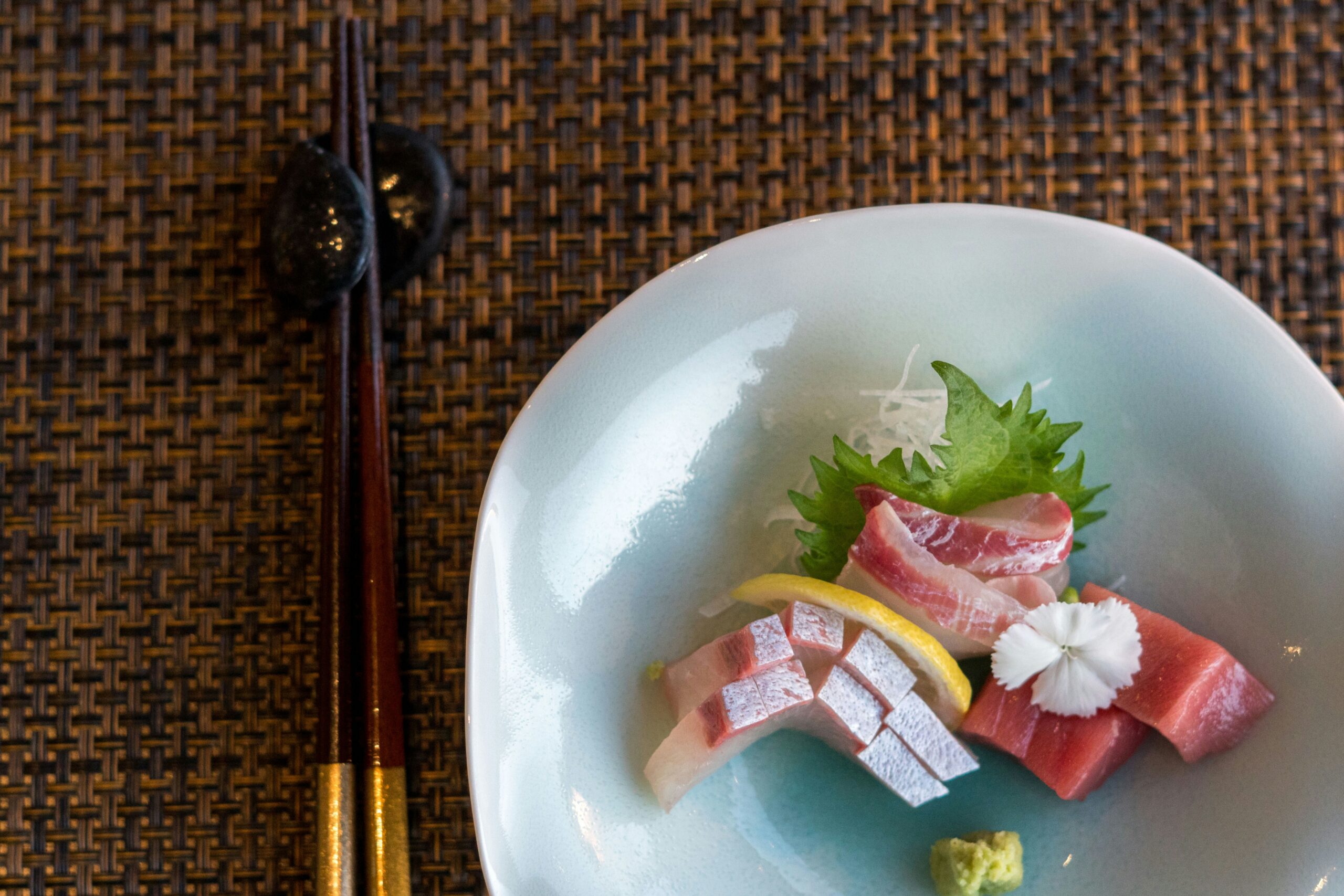
Sushi Etiquette in Japan: 7 Rules You to Know
By Una | Japan Our Way
Eating sushi in Japan is one of the experiences I want you to enjoy without feeling nervous about every movement of your chopsticks. But there are a few habits worth learning before you sit down, especially when something that seems harmless has a very different meaning here.
It is important to understand sushi etiquette rules, from passing food to dipping your nigiri in soy sauce. Some are important cultural taboos; others are ways to appreciate the food and the care behind it. Here is what I want you to know, and what to do instead.
1. Never pass food from chopsticks to chopsticks
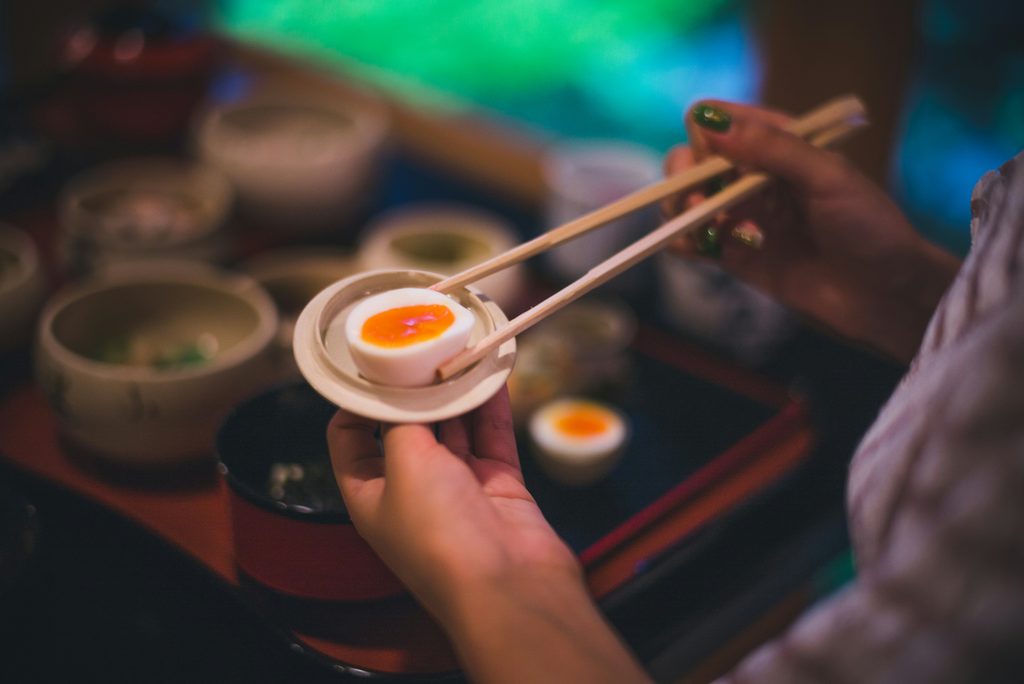
If you want someone to try your food, place it on their plate rather than passing it directly from your chopsticks to theirs. This is one of the most important Japanese chopstick etiquette rules to remember, and the reason goes far beyond ordinary table manners.
Passing something between two pairs of chopsticks recalls a Japanese funeral practice associated with cremation, when relatives transfer the bones of the deceased into an urn. That association makes the same action inappropriate at the dining table. When sharing, use the serving utensils provided and transfer food to a plate first.
2. Don’t stab your sushi—or leave chopsticks standing in rice
Chopsticks are for gently picking up food, rather than spearing it. If a piece of sushi is proving difficult to lift, stabbing it is tempting, but it is better to adjust your grip or ask for help.
There is also an important distinction behind the funeral connection: leaving chopsticks standing upright in a bowl of rice resembles a ritual offering to the deceased. Spearing a piece of sushi is poor chopstick manners, but it is the upright placement in rice that carries that particular association. When you pause, put your chopsticks on the chopstick rest instead.
And here is something that may make your meal easier: nigiri sushi can be eaten with clean hands. You don’t need to struggle with chopsticks to prove you are eating it correctly.
3. Don’t rub your chopsticks together
You might have seen people snap apart disposable wooden chopsticks and rub the tips together before eating. I recommend skipping that habit in Japan, because it can suggest you think the chopsticks are poorly made or likely to have splinters.
That does not mean every person in every casual restaurant will take offence. It is simply a gesture best avoided, particularly somewhere more formal. If your chopsticks actually have a rough edge or splinter, quietly ask for another pair rather than using damaged ones.
4. Dip the fish side of nigiri in soy sauce
With nigiri—the familiar piece of sushi with a topping resting on shaped rice—turn it gently onto its side and dip a little of the fish into the soy sauce. Avoid soaking the rice: it absorbs sauce quickly, can fall apart and may overwhelm the balance of flavours.
Think of the sauce as a light seasoning rather than a bath. You want to taste the rice and topping together, and a small amount is usually enough.
This advice applies most directly to nigiri, rather than every kind of sushi. Some pieces arrive already brushed with sauce or otherwise seasoned, so follow the chef’s guidance and taste them as served. You don’t need to add soy sauce automatically to everything on your plate.
5. Try to eat a piece of sushi in one bite
A typical piece of nigiri is intended to bring the topping, rice and seasoning together in one mouthful. Eating it in one bite, when comfortable, lets you experience that balance and avoids leaving a half-eaten piece falling apart on your plate.
But please don’t turn this into a challenge to swallow something too large. Sushi varies in size, and larger rolls or hand rolls may need more than one bite. If you are ordering directly from a chef and find the pieces difficult to manage, you can politely ask whether smaller pieces are possible.
6. Keep your elbows off the table
This is a simple piece of Japanese dining etiquette: avoid resting your elbows on the table while eating. Sit comfortably upright and give yourself enough room to handle your food without leaning heavily over the setting.
To me, the point is to be attentive to the meal and considerate of the people around you. You don’t need to sit stiffly or worry about having perfect posture throughout dinner; a little awareness is enough.
7. Remember mottainai: appreciate food and avoid waste
The final rule is the one I would most like you to take away from this guide. Mottainai is often translated as “what a waste,” but I think of it as a reminder to value what has gone into something rather than treating it as disposable.
At the dining table, that means appreciating the ingredients, the natural resources used to produce them and the work of the people who grew, caught, transported and prepared your food. Trying to finish what you order is one way to express that appreciation.
The easiest approach is to order an amount you can realistically enjoy, then add more if you are still hungry. At a conveyor-belt sushi restaurant, choosing a few plates at a time can help you avoid ordering more than you need.
Avoiding waste does not mean forcing yourself to eat beyond comfort or eating something unsuitable for you. Tell the restaurant about dietary requirements before ordering, ask about unfamiliar ingredients and choose thoughtfully. Gratitude starts with paying attention to what you order.
Sushi etiquette in Japan: a few questions you might still have
Can I eat sushi with my hands?
Yes, nigiri can be eaten with clean hands or chopsticks. If chopsticks make it difficult to turn the piece and lightly dip the topping, using your fingers is an accepted option.
Does every sushi restaurant expect the same level of formality?
The atmosphere at a casual conveyor-belt restaurant will feel different from a small sushi counter serving a chef-selected menu. The core chopstick taboos still matter, but you can take your cues from the setting and follow any instructions the restaurant gives you.
What if I make a mistake?
Correct it and carry on politely. Learning a few customs shows consideration, and you can always ask staff if you are unsure how a particular piece is meant to be eaten.
My advice: learn the basics, then enjoy your meal
If you remember only a few things, make them these: share food via a plate, keep chopsticks out of the upright position in rice, season nigiri lightly and order thoughtfully. Those habits cover the most important points without making lunch feel like an exam.
For me, good sushi etiquette comes back to appreciation—for the food, the people preparing it and the people sharing the table. Learn the reasons behind the rules, make an effort and leave yourself room to enjoy the experience.